
If you’d like to talk about any of the topics listed here or share your own ideas, feel free to write to me.
On this page, you can find informative, educational, or inspiring content for your business

Credit by Gemini
DIGITAL MARKETING
All Your Marketing Activities in One Place: How to Connect Digital Marketing and CRM
Your website is managed by one provider, your social media posts are tracked in a spreadsheet, inquiries arrive by email, and results are scattered across several different tools. This way of working often wastes time and makes decision-making more difficult. Small and medium-sized businesses do not always need another piece of software — often, what they need first is a clearly defined process.
What Is an Integrated Marketing System?
It is an agreed way of working in which goals, campaigns, content, deadlines, responsibilities, inquiries and results are connected and easy to review. CRM is part of this system when it helps organize and responsibly manage information about prospective and existing clients.
1. Map the Journey from a Post to an Inquiry
Document how a potential customer finds your business: social media or search → service page → contact → response → proposal. Define who is responsible for each step and how its status will be tracked.
2. Connect Planning with Execution
Every campaign should have a goal, topics, channels, deadlines, a task owner and a status. Your content calendar should not be disconnected from your campaign plan, and completed tasks should be visible in your reports.
3. Organize Your CRM Around Your Actual Process
A CRM can bring together contacts, companies, inquiries, tasks and communication history, but unnecessary personal data should not be collected. Access permissions, the legal basis for processing personal data and security must be reviewed before the system is put into actual use.
4. Create a Clear Overview of Results
Define several relevant KPIs for each channel. In addition to impressions and clicks, track the number of qualified inquiries, scheduled meetings and proposals. Do not combine different metrics as if they measured the same thing.
5. Automate Only When the Process Works
Automation can help with reminders, task assignments or transferring permitted data between tools. First, check data quality, access permissions and integration reliability. Automation cannot fix a poorly designed process.
What Does a Marketing System Setup Service Include?
Initial review of existing tools → process mapping → proposed system structure → configuration of the selected CRM and workflows → connection of supported channels → testing → training → reporting and continuous improvement. The scope of technical integrations and software costs will be defined in the proposal.
Frequently Asked Questions
Do I need to replace my existing CRM?
Not necessarily. We first assess whether your existing tools can support the process you need.
Is this only for large companies?
No. Small teams can often benefit the most from a simple, well-organized system.
Are all integrations automatic?
No. The available options depend on the tools, supported integrations, permissions and budget.
Conclusion and Call to Action
Would you like a more organized marketing process, less manual work and clearer reporting? Get in touch to discuss setting up a marketing system for your business.

Credit by Gemini
DIGITAL MARKETING
Digital Content and Social Media Management: From Posts to Business Results
Many businesses regularly post on Facebook, Instagram or LinkedIn, but struggle to answer the question of what these activities have actually contributed to their business. The problem is often not the number of posts, but the lack of a clear plan. Professional social media management connects content, audiences and business goals.
What Does Professional Social Media Management Involve?
The service involves much more than designing an image and clicking the “Publish” button. It includes analysing existing channels, defining the target audience and objectives, selecting topics, creating content, organising publishing and monitoring results. The scope of community moderation and responding to messages is agreed upon separately.
1. Strategy Before the Content Calendar
First, we define who we want to reach, what we want the audience to do and which channel makes sense for a particular business. For example, a local service provider and a B2B manufacturer should not use identical tones of voice, posting schedules or formats.
2. Content That Solves Problems
A good content plan combines educational posts, service presentations, examples of work, answers to frequently asked questions and clear calls to contact the business. Every post should serve a purpose: attracting attention, building trust or encouraging an enquiry.
3. One Idea, Multiple Formats
A single high-quality article or topic can be repurposed into a LinkedIn post, an Instagram carousel, a Facebook video and Stories. This does not mean copying content blindly. Each platform has its own content consumption habits, so the text, length and visuals should be adapted accordingly.
4. A Consistent Visual Identity
Canva templates, typography, colours, photography and writing style help audiences recognise a brand. Design should support the message and readability, especially on mobile devices.
5. Analytics and Continuous Improvement
We monitor reach, interactions, saves, clicks and enquiries, distinguishing attention metrics from actual business results. Based on the data, we refine topics, formats, calls to action and publishing schedules.
What Does the Collaboration Process Look Like?
Initial analysis → monthly strategy and plan → content preparation and approval → publishing → monthly report and recommendations. The client knows in advance what will be delivered, to what extent and when.
Frequently Asked Questions
Is posting every day enough?
No. Quality, relevance and consistency are more important than the number of posts alone.
Which social media platforms are best for my business?
It depends on your audience, the type of service you offer and your objectives. The choice should be based on the actual needs of your customers.
What will I receive in the monthly report?
An overview of published content, key performance indicators, insights and recommendations for the next period.
Conclusion and Call to Action
Do you need a strategy, high-quality content and reliable social media management? Get in touch to discuss a tailored proposal for working together.
Credit by Gemini
SEO, GEO & AI SEARCH
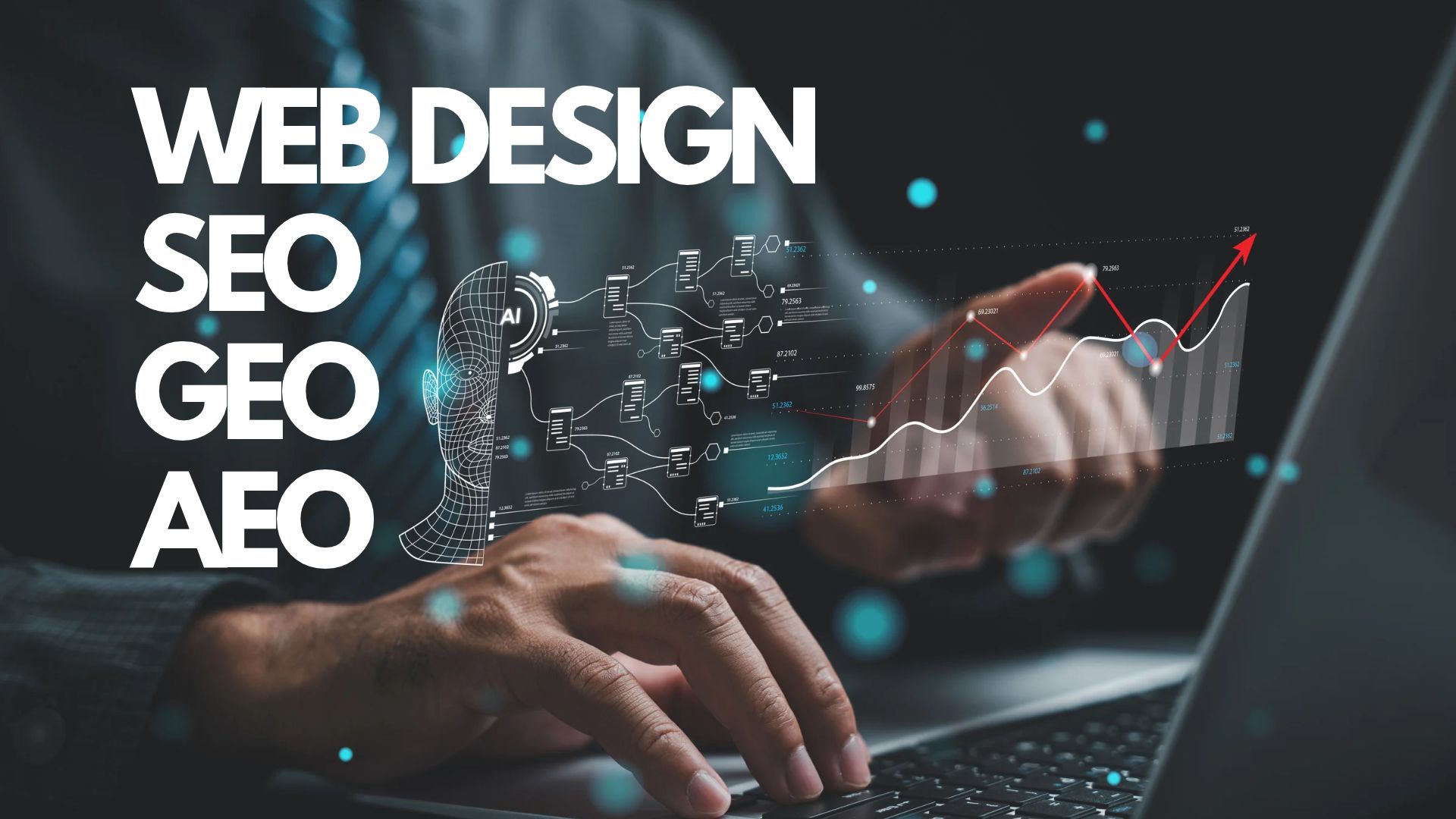
Website Optimization for AI Search Engines: SEO, GEO and AEO
Can AI search engines find your business? The way customers search for information is changing. Alongside traditional Google searches, people increasingly ask AI tools questions and expect clear, relevant answers. Discover how to prepare your website for modern search and improve your business's digital visibility.
What Does Website Optimization for AI Search Mean?
Website optimization for AI search involves improving content, structure and technical elements so that information is clear to users and accessible to search systems.
SEO (Search Engine Optimization) focuses on improving visibility in search engines. GEO (Generative Engine Optimization) refers to adapting content for generative AI systems, while AEO (Answer Engine Optimization) emphasizes providing clear, useful answers to specific user questions.
These approaches complement one another. None of them guarantees that a particular AI tool will display or recommend your website.
Why Is AI Search Important for Small and Medium-Sized Businesses?
Potential customers increasingly research products, services and business solutions through conversations with AI tools. Instead of performing several separate searches, they may ask more complex questions and request comparisons of available options.
For businesses, it is important to provide clear service descriptions, reliable information and content that answers potential customers' questions.
1. Clearly Present Your Business and Services
Your homepage should immediately explain what your business does, who your services are intended for and which problems you solve.
Avoid vague statements such as "We provide innovative, high-quality solutions." Instead, describe your specific services, areas of expertise and how you work with clients.
Consistent business information, location details and contact information help visitors understand your offering.
2. Create Content That Answers Customer Questions
High-quality content should provide useful answers to questions potential customers ask before making a decision.
Explain what your service includes, who it is designed for, how your process works and what benefits clients can expect.
Use clear subheadings, concise paragraphs, practical examples and frequently asked questions. Avoid unnecessary keyword repetition.
3. Improve Your Website's Technical SEO Structure
Technical optimization provides an essential foundation for making website content accessible and understandable.
- Check whether important pages can be properly indexed.
- Optimize loading speed and mobile responsiveness.
- Use clear page titles and unique meta descriptions.
- Organize content using a logical heading hierarchy.
- Connect relevant pages through internal links.
- Implement appropriate structured data where applicable.
Structured data can help systems interpret certain types of information, but it does not guarantee inclusion in AI-generated answers.
4. Build Trust Through Expert and Up-to-Date Content
Showcase your experience, real projects and relevant examples of your work. Keep important information up to date and support your claims with verifiable evidence.
Clearly identified authors, accurate service descriptions and consistent business information help build trust with potential customers.
5. Monitor Optimization Results
Google Search Console helps you monitor your website's performance in Google Search, while Google Analytics 4 helps you analyze website visits and user activity.
Track relevant search queries, organic traffic, visits to service pages and enquiries.
Visibility in AI-generated answers cannot be reliably measured using a single universal metric. Where data is available, monitor referral traffic from AI sources as well.
How to Start Optimizing Your Website for AI Search Engines
Begin by reviewing your homepage, service pages, About Us page, contact page and existing blog articles.
Check whether each page clearly explains its topic, addresses user needs and includes an appropriate call to action.
Based on your findings, create a prioritized list of content and technical improvements.
Frequently Asked Questions About AI Website Optimization
What Is the Difference Between SEO, GEO and AEO?
SEO focuses on search engine optimization, GEO on adapting content for generative AI systems, and AEO on structuring clear answers to user questions. These approaches share common foundations and complement one another.
Does GEO Replace Traditional SEO?
No. High-quality content, technical accessibility, clear structure and reliable information remain essential foundations of website optimization.
Can You Guarantee Visibility in ChatGPT or Other AI Tools?
No. Optimization can improve the quality and accessibility of information, but no method can guarantee that an AI system will display or recommend a particular website.
Is AI Optimization Relevant for Small and Medium-Sized Businesses?
Yes. Small and medium-sized businesses can improve their digital visibility through high-quality content, clear information about their services and a technically well-structured website.
Prepare Your Website for the Next Generation of Search
Your website should be easy for potential customers to understand, technically accessible to search engines and aligned with your business objectives.
Would you like to discover what could be improved on your website?
Contact me for an initial website review and a prioritized set of recommendations for SEO, GEO and AEO optimization.

Image credit: ChatGPT
MARKETING & BRANDING
What Does Your Business Really Need from Digital Marketing?
Every business has different needs. That is why digital marketing should not start with choosing social media platforms or launching ads, but with understanding your business goals and the customers you want to reach. When marketing activities are aligned and focused on the same objectives, it becomes easier to identify what delivers results and where resources should be invested.
One of the most common questions small and medium-sized business owners ask is which marketing channels they should use and where they should invest. Social media, advertising, websites, email marketing and content can all be valuable, but only when they have a clear role in achieving business goals.
Launching campaigns without a plan, creating profiles on every platform or advertising simply because competitors are doing so does not guarantee results. More activity does not automatically mean better marketing.
Why Don't More Marketing Activities Automatically Lead to Better Results?
When time, budget and people are spread across too many disconnected activities, it becomes difficult to determine what is actually contributing to business performance. Instead of constantly adding new channels, businesses need to build a sustainable marketing system in which every activity serves a clear purpose.
How Do Business Goals and Your Target Audience Determine Which Channels to Use?
The first step is to define your objective. Do you want to increase brand awareness, attract qualified B2B enquiries, generate sales through your online store or educate your market?
Next, you need to understand your ideal customers: who they are, what matters to them, how they look for solutions and where they spend their time. Google and LinkedIn may be important for certain B2B offerings, while Instagram, TikTok or Facebook may play a greater role for particular B2C products and services.
Your choice of channels depends on your goals, audience, offering, stage of business development, budget and the way your customers make decisions.
The Role of Key Elements: Your Website, Social Media, Content and Advertising
Your website gives potential customers a place to explore your offering in more detail and take the next step. Social media helps you build relationships and attract attention. Valuable content answers customers' questions, while paid advertising can expand your reach and attract a relevant audience.
Not every business needs to use every channel. What matters is choosing the channels that serve a clear purpose in the customer journey.
How Can You Connect Marketing Channels into an Effective System?
- A social media post or ad captures a potential customer's attention.
- A link takes them to a relevant page or article on your website.
- A clear call to action encourages the visitor to send an enquiry or book a consultation.
- With appropriate consent, email communication can help continue the relationship with an interested prospect.
When your channels work together, it becomes easier for customers to move from initial contact to a decision, and for you to understand which activities contribute to results.
Setting Priorities and Measuring Meaningful Results
Likes, views and follower counts can be useful indicators, but on their own they do not show whether marketing is contributing to business goals. Track relevant enquiries, conversion rates, customer acquisition cost (CPA), return on ad spend (ROAS) and contribution to sales.
Start with a few metrics directly linked to your objectives. As your marketing system develops, you can expand your reporting.
When Is It Time for a Marketing Audit?
A marketing audit helps you identify which activities are delivering results, where resources are being spent without a clear return, which channels should be retained or improved, and how all your marketing activities can be connected into a coherent plan.
Frequently Asked Questions About Digital Marketing
Does a business need to be active on every social media platform?
No. It is more important to be present on the channels your target audience uses and to manage them consistently with a clear purpose.
What Is the Difference Between Google Ads and Social Media Advertising?
Google Ads often reaches people who are already searching for a particular product or solution. Social media advertising can help people discover your offering and build interest among relevant audiences.
How Long Does It Take for Digital Marketing to Deliver Results?
It depends on your objectives, market, budget, competition and quality of execution. Paid campaigns can generate initial data quickly, while SEO and trust-building generally take more time.
Let's Find the Right Marketing Approach for Your Business
You do not need to be everywhere or invest in every new platform. You need clear goals, the right priorities and marketing activities that work together.
Contact me for a marketing audit to discover where your marketing can deliver better results.

Image credit: ChatGPT
MARKETING & BRANDING
Is Your Business Website Really Working for You? 7 Elements That Turn Visitors into Potential Clients
Your business website may look modern, contain basic information about your company and be connected to your social media profiles. However, that does not mean it is fulfilling its full business potential. If visitors do not understand your offering or know what to do next, your website remains a digital presentation rather than a tool that supports sales and attracts new clients.
An effective business website should help potential clients find you, understand your offering, build trust and take the next step.
What Is the Role of an Effective Business Website?
- To help potential clients find you through search engines.
- To clearly communicate your offering and the value you provide.
- To build trust and make it easier for visitors to contact you or make a purchase.
1. Clear Offering and Positioning
Visitors should immediately understand what your company does, who your offering is designed for and why they should choose you. If this information is unclear, potential clients may leave your website before exploring your services or products.
How Can You Improve This Area?
Use a clear main headline, a subheading that explains the value of your offering and a visible call to action. Avoid generic messages that do not communicate exactly what you provide.
2. User-Friendly Website Structure and Navigation
Visitors should be able to find information about your services, products, company and contact details easily. A logical structure makes navigation easier for both users and search engines.
Why Is Clear Structure Important for SEO and GEO?
Meaningful navigation, clear headings, readable URLs and well-connected pages help search engines understand your website content. Structured and precise content also makes it easier for artificial intelligence systems to identify relevant information about your offering.
3. Content That Builds Trust and Answers Questions
Your content should answer the questions your customers actually ask. Project examples, case studies, frequently asked questions, testimonials and reviews can help visitors assess whether you are the right choice for them.
High-quality, useful content also supports SEO and helps communicate your expertise.
4. SEO Optimization Focused on User Intent
SEO is not simply about inserting keywords. You need to understand what people are searching for, what kind of answer they expect and which page best matches their intent.
Pay attention to keyword research, your website's technical health, titles and meta descriptions, internal linking and structured data where relevant.
5. Mobile-Friendly Design
Your website should be easy to use on a mobile phone: text must be readable, buttons easy to tap, and contact details and forms simple to use. Loading speed also affects the user experience.
6. Clear Calls to Action (CTAs)
Visitors should be clearly guided towards the next step: requesting a quote, booking a consultation, calling your company, downloading a guide or catalogue, or making a purchase.
Use specific wording that describes the next step instead of vague messages such as "click here".
7. Connecting Your Website with Marketing and Performance Measurement
Your website should be connected to other relevant channels, including Google Search, social media, paid advertising and email communication. Tools such as Google Analytics 4 (GA4) and Google Search Console can help you monitor traffic, user behaviour and search visibility.
Is Your Website Delivering the Results You Expect?
Modern design is important, but it is only one part of an effective website. Content, structure, user experience and clear calls to action need to work together.
Would You Like to Discover Where Your Website Is Losing Potential Clients?
Contact me for a marketing audit to identify opportunities to improve your website and marketing performance.

Image credit: ChatGPT
MARKETING & BRANDING
Why Are Your Marketing Activities Not Delivering the Expected Results?
You invest in marketing, publish content on social media, and have a business website, but the number of qualified enquiries and sales is not growing as expected. The problem may not be the amount of marketing you do, but a lack of clear strategy and coordination between your activities.
This article is intended for small and medium-sized business owners who invest in marketing but are unsure which activities are delivering results and what needs to be improved.
Marketing can involve many different activities, but if they are not aligned with your business goals, it is difficult to unlock their full potential. Instead of immediately adding new channels or increasing your budget, you first need to understand what is happening right now.
1. Your Marketing Lacks Clearly Defined Business Goals
Without clear goals, it is difficult to measure success. Do you want more qualified enquiries, increased sales, greater brand awareness, or more repeat business from existing customers? Each goal requires a different approach and a different way of measuring results.
What Can You Do?
Define a specific business goal, a timeframe, and the performance indicators that will help you measure progress. Align your marketing objectives with the actual needs of your business.
2. You Don't Know Your Customers Well Enough
If you do not understand who your customers are, what matters to them, and how they choose products or services, your communication may fail to address their needs.
What Can You Do?
Analyse your existing customers, their questions, their needs, and the reasons they choose your offer. Customer conversations and enquiry analysis can reveal valuable insights that help you improve your marketing.
3. Your Website, Content, and Marketing Channels Don't Work Together
Social media can attract attention, but interested users should be able to find the information they need on your website and understand how to get in touch with you.
What Can You Do?
Check whether your messages, offer, and calls to action are consistent across all channels. Remove obstacles that make it difficult for potential customers to move from initial interest to an enquiry or purchase.
Your website shouldn't simply exist — it should support your business goals and make the next step easier for your visitors.
4. You Measure Activity Instead of Business Results
The number of posts, views, and likes can show that something is happening, but it does not necessarily mean that your marketing is attracting new customers or increasing sales.
What Can You Do?
Track the performance indicators that match your goals: the number and quality of enquiries, conversions, customer acquisition cost, sales, and return on advertising spend.
Measurement is not just a final report — it should help you decide what to do next.
5. You Lack Clear Priorities and an Action Plan
When everything is considered equally important, resources become spread too thin and execution becomes inconsistent.
What Can You Do?
Identify the activities with the greatest potential, assign responsibility, set deadlines, and decide how you will measure results. Regularly adjust your plan based on the data you collect.
Marketing Should Be Viewed as a System
Strategy, website, content, social media, advertising, and performance analysis should all work together. When every activity has a clear role and contributes to the same goal, it becomes easier to identify what works and where resources should be invested.
Where Should You Start?
A marketing audit provides an overview of your existing activities and helps identify:
- activities that deliver results and those that need improvement;
- problems with the integration of your website, content, and marketing channels;
- priorities aligned with your business goals;
- specific steps to improve your marketing.
Marketing Audit
If you want a clearer picture of what needs to be improved, contact me for a marketing audit.
Frequently Asked Questions
How Do I Know Whether My Marketing Is Delivering Results?
Connect your activities to your business goals and track indicators such as qualified enquiries, conversions, and sales, rather than focusing only on the number of posts or reactions.
Do I Need a New Website or a New Marketing Strategy?
That depends on the cause of the problem. An audit can help determine whether you need to improve your existing website, strategy, content, channels, or the way they work together.
What Is a Marketing Audit?
A marketing audit is an analysis of your existing marketing activities, their effectiveness, and their alignment with your business goals, along with recommendations for improvement.
How Do I Know Where to Start Improving My Marketing?
Start with your goals, customers, and current results. Then identify the most important obstacles and set priorities for the coming period.
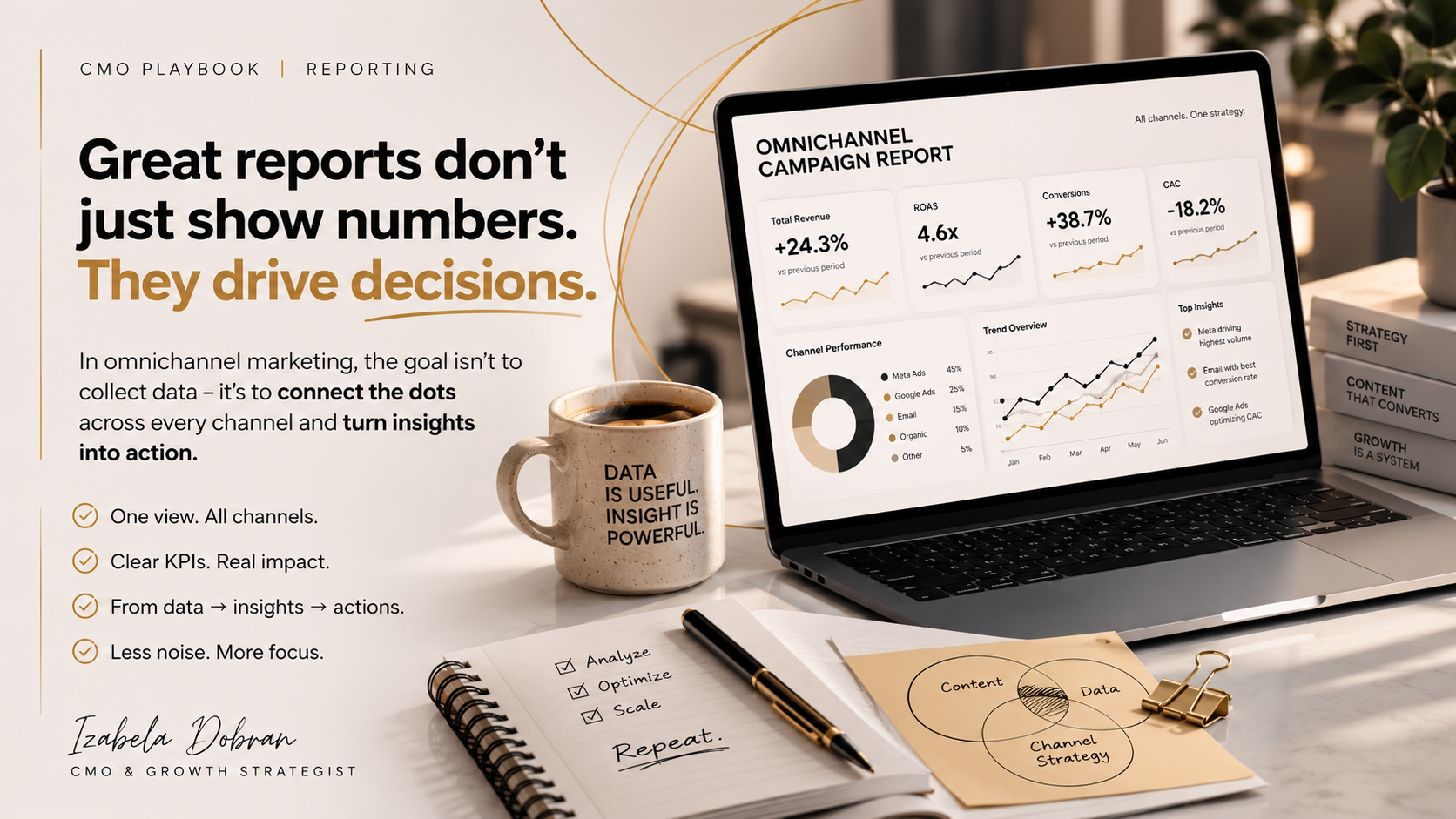
Image credit: ChatGPT
MARKETING & BRANDING
Omnichannel Reporting Helps You Make Better Decisions.
Omnichannel reporting is not just about collecting data. It is about turning numbers into strategic decisions. A strong reporting framework connects customer journeys, communication channels, and business objectives.
One of the biggest mistakes I see in performance marketing is reporting on each channel separately. Meta has one report. Google Ads has another. Email has its own dashboard. The CRM tells a different story. The result? Lots of numbers. Very little clarity.
An effective omnichannel report should answer three questions:
- Are we achieving our business objectives?
- Which channels are generating real incremental value?
- What should we do next?
A report should never be just a collection of KPIs. It should tell the story behind customer behaviour across all touchpoints and turn data into concrete actions.
Data informs. Insights transform. Action drives growth.
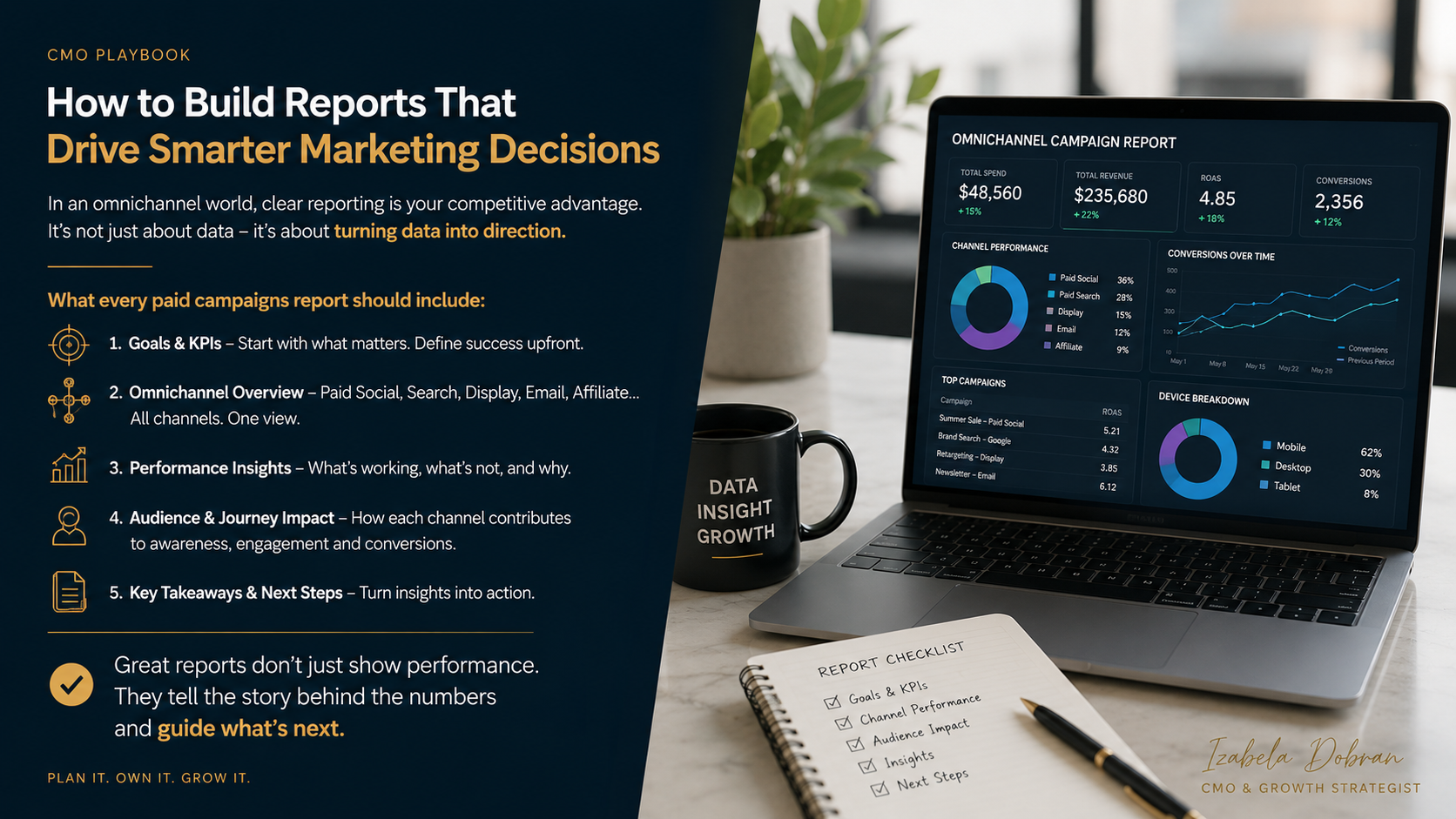
Image credit: ChatGPT
MARKETING & BRANDING
Marketing Reporting Connects the Entire Customer Experience.
An excellent marketing report does more than impress stakeholders with numbers. It gives them the confidence to make better decisions. Every week, marketing teams create dozens of dashboards. But executives rarely ask for more charts — they ask, “What does this mean for the business?”
That is the real purpose of omnichannel reporting. Instead of measuring each platform independently, we need to connect the entire customer journey.
A high-impact report should include:
- Business KPIs before channel-specific KPIs.
- Performance across the different stages of the sales funnel.
- Cross-channel attribution.
- Cost efficiency and incremental growth.
- Key insights and lessons learned.
- Recommended next steps.
Good reporting explains what happened. Excellent reporting explains why it happened and what should be done next.
When reporting becomes a strategic tool — rather than just an operational task — marketing earns its place at the leadership table.
Because decisions don't come from dashboards. They come from clarity.
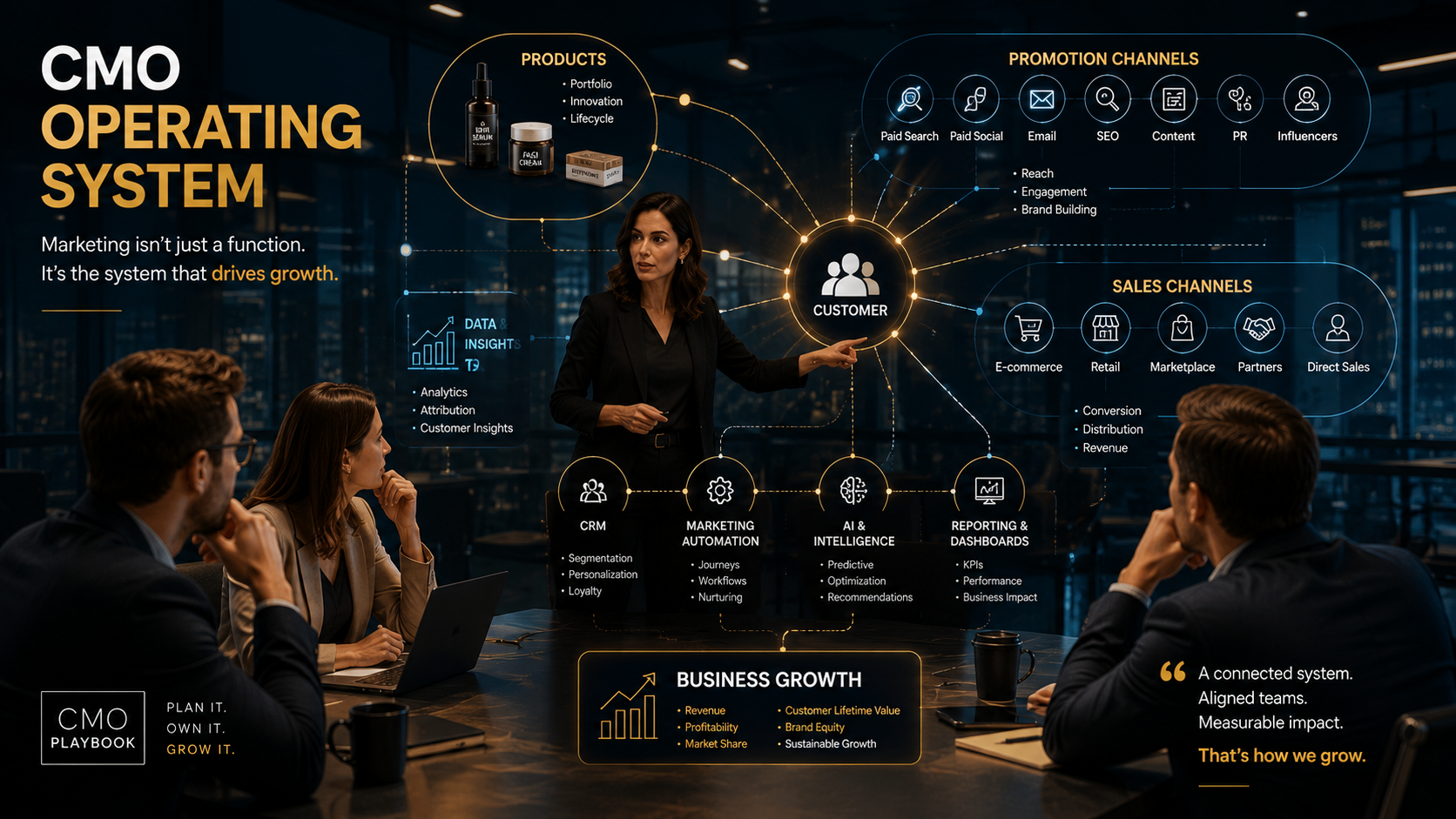
Image credit: ChatGPT
MARKETING & BRANDING
The Marketing Operating System Problem
Most companies don't have a marketing problem. They have a marketing operating system problem. Marketing is not a collection of campaigns, channels, or dashboards. It is an interconnected system in which strategy, people, technology, data, and execution must work together toward the same business goal.
When these elements operate in isolation, even the best campaigns struggle to generate sustainable growth.
High-performing marketing organizations ask different questions:
- Are our products aligned with customer needs?
- Do our sales and marketing channels work together?
- Does our data help us make faster, better decisions?
- Can every team explain how its work contributes to business growth?
The role of a modern CMO is no longer just to manage marketing. It is to design and coordinate a system that enables predictable growth.
Because growth is not the result of one successful campaign. Growth is the result of a well-designed operating system.
What is the biggest challenge in building an integrated marketing organization?

Image credit: Freepik
MARKETING & BRANDING
How to Start Marketing and Branding Your Business? In Parallel!
1. Question: Defining the company.
What should the answer look like? Let's use a beauty salon as an example.
Possible answers: "Hair and Beauty Salon", "Beauty Studio", or "Wellness & Style Studio".
2. Question: Company name.
Examples: "Gaga", "Gaga Style", "Dragana Lazić Studio", or "Fancy Style".
3. Question: Defining the service or product.
Possible answers: "Hair, face, and body care", "Hair and beauty services", or "Hair salon and face/body treatments".
What do you notice here? The key difference lies in how the definition is formulated. Marketing defines Who? What? Where?, while branding defines How?
The choice of name sets the tone for communication with the client — and that tone is precisely the foundation of branding.
4. Question: What kind of service is it?
For example: A quality service means using high-quality products, professional equipment, and qualified staff in a pleasant environment.
This is a marketing approach.
Now branding adds emotion: exceptional service, a premium experience, and special treatments. This is what makes your brand recognizable and different from others.

Image credit: Freepik
BRANDING
Branding, Emotions, and Client Perceptions – What Tone of Voice Should We Use?
There is always the same challenging question: what tone of voice should we use when communicating with a client? How can we make our clients feel valued without diminishing our own worth?
Let's start with this: how does every client want to feel? Comfort, attention, dedication, empathy, security, and the feeling that they are doing something good for themselves — all of these lead to one clear emotion: trust.
That is why our tone of voice should guide clients towards that very feeling of trust. How? Through the atmosphere we create in our space, the time we dedicate to each client (ideally, without rushing, but also without unnecessary delays), the professionalism of our team, our commitment to hygiene, and our attention to client safety.
What does this look like in practice? For example:
- Branded lids for cups or glasses that help maintain hygiene during treatments.
- A simple tissue box for clients — elegant-looking and inexpensive, yet a thoughtful way to show care and respect.
- A small chair or shelf next to the client's seat where they can place their bag — practical and considerate.
- Coat and jacket hangers — there is no need for clients to leave their belongings draped over a chair!
These small details play a major role in branding. The clearer and more precise your marketing and branding strategies are, the simpler and more effective your advertising will become. Most importantly — no false promises!
What is promised through branding, defined through marketing, and communicated through advertising must genuinely exist in reality.
When everything is aligned, success is guaranteed.

Image credit: Freepik
BRANDING VS ADVERTISING
Branding Your Space, Environment, and Atmosphere? It's About Emotion.
The place where a business operates represents one of the 4Ps of marketing (Product, Place, Price, Promotion) — the marketing framework defined by E. Jerome McCarthy in 1960. This is why branding your physical space is such an important part of running a business. The more welcoming the environment is for clients, the more often they will return. This is a fundamental principle of the entire service industry — so make the most of this element.
How can I help? Let's start with the basics: choosing colors. Color = Emotion = Brand.
Every color evokes a particular feeling:
- Beige – comfort, refinement, balance.
- White – cleanliness, neatness.
- Light green – nature, relaxation.
- Lavender – spirituality, calm.
- Blue – transparency, intelligence.
- Surgical green – innovation, modernity.
- Black – elegance, precision.
- Brown – evokes coffee and chocolate (pleasant when used in smaller amounts).
- Navy blue – sophistication.
- Baby pink – gentleness, elegance.
- Orange – a call to action, energy.
- Red – determination, courage.
- Yellow – joy, cheerfulness, childlike energy.
- Pink – youthful spirit, playfulness.
- Purple – luxury, abundance.
Experiment with colors! Ideally, your social media posts and advertisements should reflect the color palette of the space where you welcome your clients.
Once again, the key word is trust. When clients see consistency — when what they see in your advertisements matches what they experience in your space — they feel more relaxed. A relaxed atmosphere builds trust, relationships, your brand, and, of course, profit.
Beyond colors, the atmosphere is also shaped by materials such as glass, wood, plastic, and metal. A well-balanced combination of these elements creates harmony. Don't forget temperature, fresh air, scents, sounds, and music — they all shape the client experience.
One more recommendation: remove unnecessary details. "Less is more" has been a dominant trend for years. A space without excessive decorative elements feels more welcoming and attractive.
So, what is the purpose of branding your space?
To make your client happy they chose your product or service — and chose you!

Image credit: Freepik
ADVERTISING
What Is the Most Effective and Affordable Form of Advertising? – THE PITCH!
A pitch is a short, persuasive presentation or speech designed to spark interest in an idea, product, service, or project. Its goal is to communicate the key value clearly, address the target audience's problems, and encourage them to take action — all in as little time as possible.
Typical examples include:
- Elevator Pitch – A short speech (30–60 seconds) designed to convince someone of the value of your idea, as if you were delivering it during an elevator ride.
- Sales Pitch – A presentation focused on selling a product or service.
- Investor Pitch – A more detailed presentation aimed at potential investors, explaining the business model, market, strategy, and expected return on investment.
A good pitch is short, clear, and tailored to the audience's needs. It often includes emotional elements to create a stronger connection.
Now let's talk about advertising — real, face-to-face advertising in the real world. Imagine you have time for just three sentences.
Let's give it a try:
1. "Your hairstyle looks amazing! Where did you get it done? We do the same style at our salon — it's called a 'Choppy Bob'. We simply blow-dry the ends slightly outward and to the side. Here's our business card; check us out on Instagram."
2. "Have you thought about redesigning your website? There are some new trends out there. We've launched our '555' offer — 5 pages, in 5 days, for €500. It will completely change how people see your brand — making it look as though you've taken a major step ahead of your competitors."
3. "We've just received some new products for cellulite treatments. I'm absolutely swamped — my phone keeps ringing, and I have no appointments available. But if you'd like, I can fit you in if someone cancels."
Prepare at least 10 pitches for yourself. This is one of the most effective, affordable, fast, and powerful ways to attract new clients.
Always carry a business card or brochure with you. Offer it straight away — and, if possible, place it directly in the hands of a potential client.

Image credit: Freepik
ADVERTISING
When Is Someone Truly Motivated to Buy a Product or Pay for a Service? When It Solves a Problem!
When does someone make a purchasing decision? – When they are motivated.
When are they motivated? – When buying something helps solve a specific problem.
This may sound strange because we have been taught that sales are about satisfying customers' needs and wants.
Yes, but what is the deeper question? Behind every need or desire, there is a specific problem.
How so? It's simple: we call a plumber because we have a problem with our pipes or a valve,
a mechanic because there is a problem with our car,
or a dentist because we have a problem with our teeth.
You might now be wondering: why do women go to the salon to have their hair blow-dried and styled? Surely, that's not about solving a problem.
But it actually is.
An anti-cellulite treatment also solves a problem, just like having a website created or going to a restaurant.
You don't want to cook, you want to treat someone to something special, but you can't do it at home,
or perhaps you don't know how to cook – that, too, is a problem being solved.
So, the next time you create an advertisement, remember: you are solving someone's problem.
You just need to package your message the right way!

Image credit: Leonardo AI
MARKETING & BRANDING
How to Start Building Your Brand on a Limited Budget
Branding doesn't have to be expensive to be effective.
Startups and small businesses can create a professional visual identity using simple, affordable tools and resources.
Start by defining your company and its mission, then establish the basics — a logo, a color palette, and typography.
Maintain consistency across all channels: social media, your website, and email communications.
Use free or affordable tools such as Canva, Figma, or Adobe Express to create visual content.
Test what resonates most with your audience and adjust your content accordingly.
A good plan, a clear message, and a consistent visual identity build brand recognition and trust — even without a large budget.
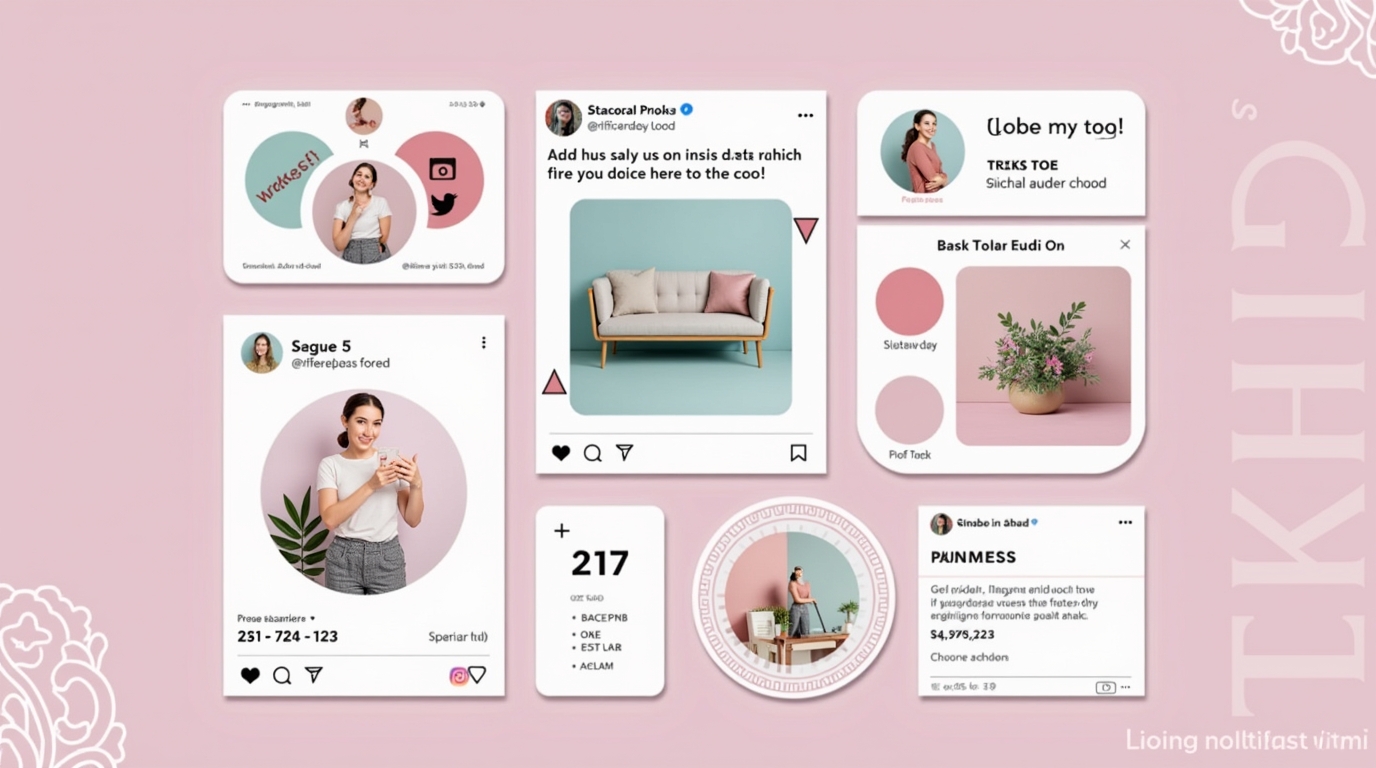
Image credit: Leonardo AI
MARKETING & BRANDING
Mini Visual Start: What It Includes and Why It Matters
Mini Visual Start is a package designed for entrepreneurs and small businesses that want to make a professional impression from the very beginning, even without a large budget.
The package includes essential visual identity elements: Canva graphics for social media, profile and cover images for Facebook, Instagram, and TikTok, optimized bio sections, and integration with the Linktree platform.
The package also includes a business card prepared for print, as well as short online consultations that provide guidance for further development.
The value of this package lies in establishing a solid foundation. Consistent, professional visual communication from the start helps a brand stand out, build trust, and support the further development of its marketing activities.
Even with minimal resources, a clear structure and carefully designed visual elements help build brand recognition and enable business owners to communicate their brand professionally and independently.
Mini Visual Start is a practical solution that speeds up the first steps toward branding and establishing a digital presence.

Image credit: Leonardo AI
MARKETING & BRANDING
Brand Refresh: When and How to Refresh Your Visual Identity
A brand refresh is useful when an existing visual identity no longer reflects the brand's professionalism or values.
Outdated or inconsistent elements can create an impression of carelessness and unprofessionalism, affecting how clients perceive the brand.
The refresh process involves reviewing and improving key elements, including the color palette, typography, logo, social media visuals, and promotional materials.
The goal is to ensure that all elements are consistent and appealing while preserving the brand's recognizability.
A brand refresh also involves redefining the tone of voice so that the brand communicates its values more clearly and builds trust.
A redesign does not mean changing everything. It means strategically improving the elements that enable a clear, professional, and cohesive brand presentation.
This process enables entrepreneurs and companies to communicate consistently, attract their target audience, and support the further development of their marketing activities.
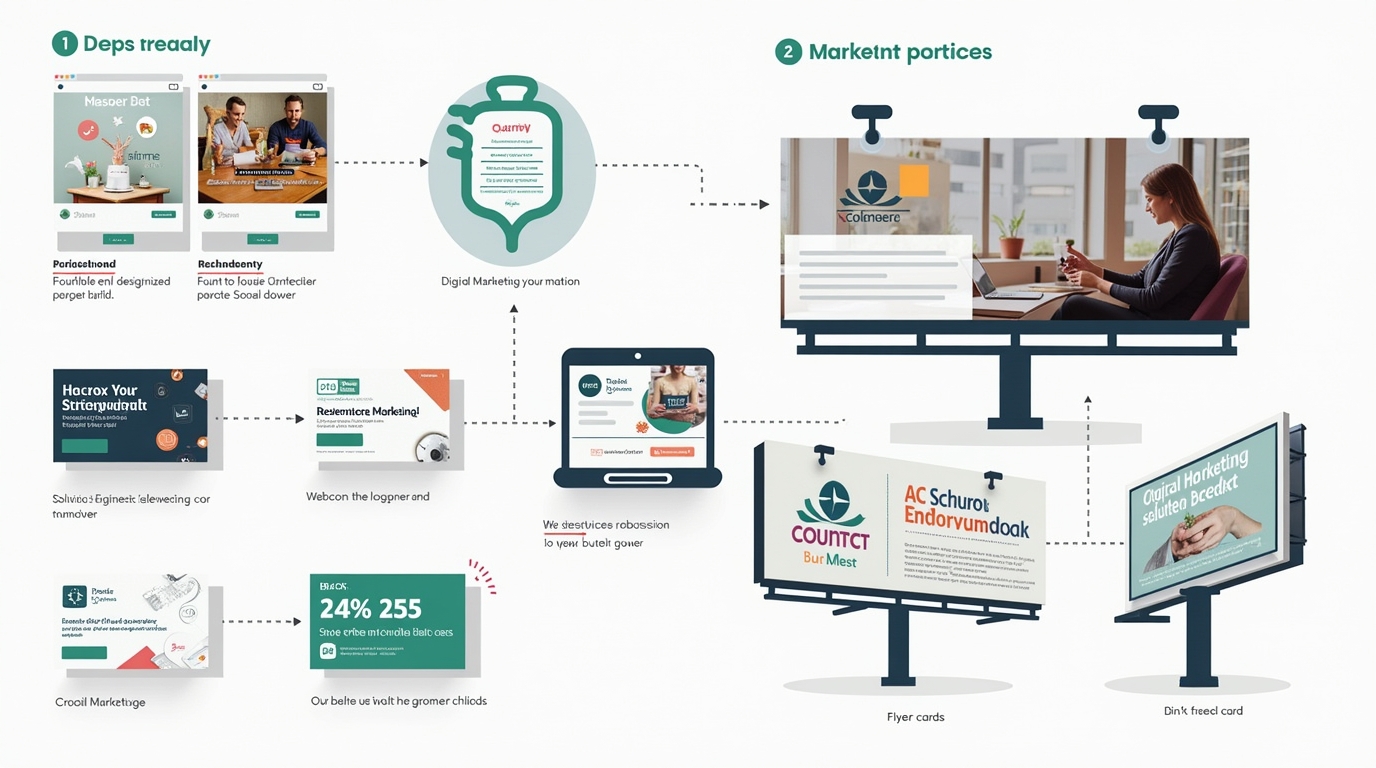
Image credit: Leonardo AI
MARKETING & BRANDING
Digital vs. Offline Marketing – What to Choose and How to Combine Them
Digital marketing enables fast communication, measurable results, and targeted advertising, while offline marketing builds trust through personal interaction and a physical presence.
The ideal strategy combines both approaches. For example, a social media presence can be complemented by promotional flyers or visual materials at the point of sale.
The advantages of digital marketing include flexibility, lower costs, and easier performance tracking, while offline strategies strengthen a brand through physical and visual experiences, such as business cards, brochures, trade show materials, and billboards.
By combining these channels, entrepreneurs can build a consistent brand image, increase brand recognition, and strengthen relationships with their audience.
The key is to plan communication so that digital and offline materials work together as a unified whole, contributing to a clearly defined brand experience.
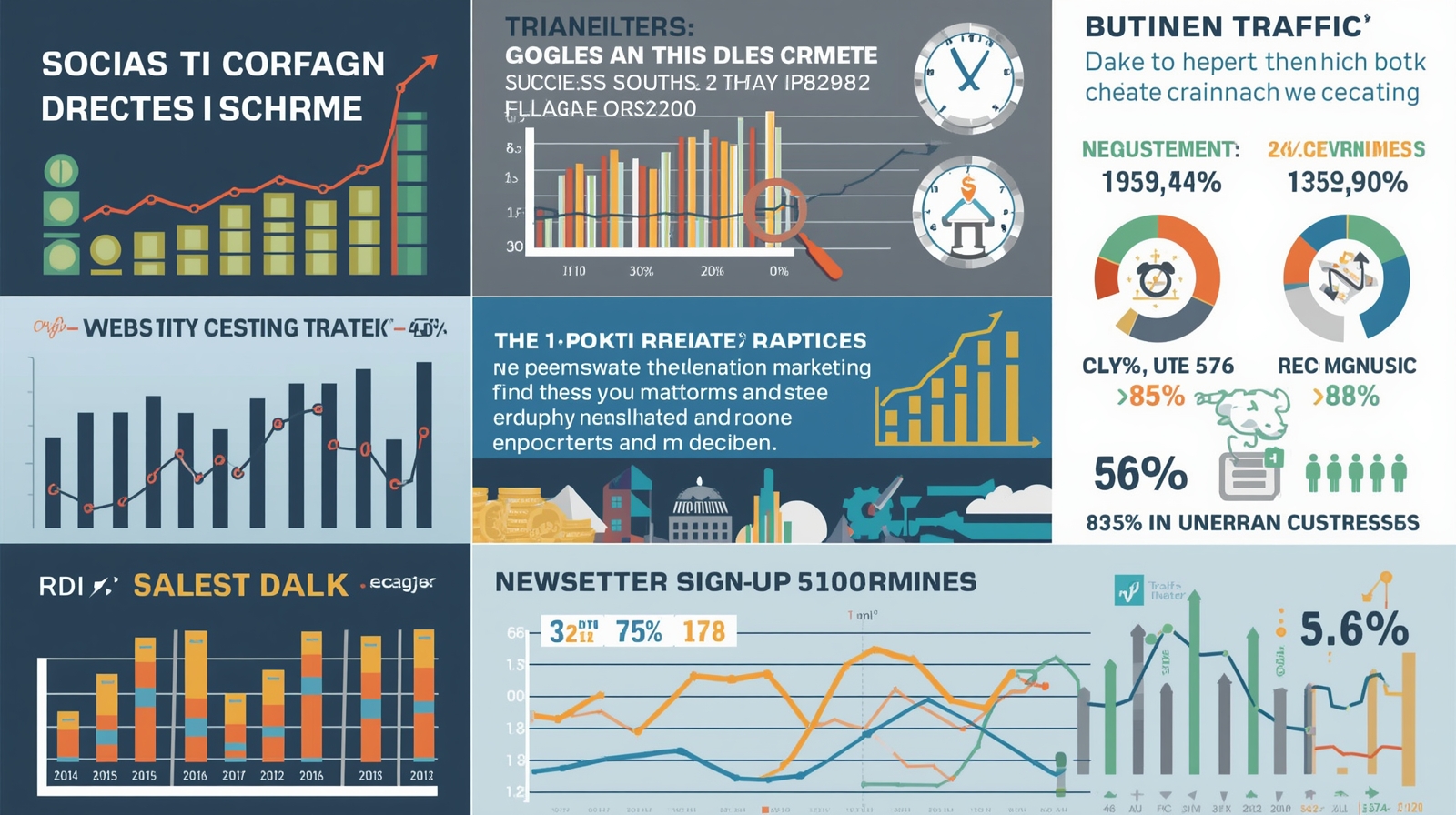
Image credit: Leonardo AI
MARKETING & BRANDING
How to Create Content That Engages Your Audience
Creating content that attracts and engages your audience requires an understanding of your target audience and its interests. On social media, combining visual and written content increases the potential for interaction. Eye-catching photos, short videos, infographics, and motivational messages can capture attention.
Blog articles and newsletter campaigns help educate audiences in greater depth and build trust. However, it is important that they are clear, informative, and include a precise call to action.
A consistent publishing schedule, a steady tone of voice, and carefully planned topics are essential for increasing audience engagement.
Analyzing audience responses helps you adapt your content to continuously increase engagement and strengthen the connection between your brand and your audience.